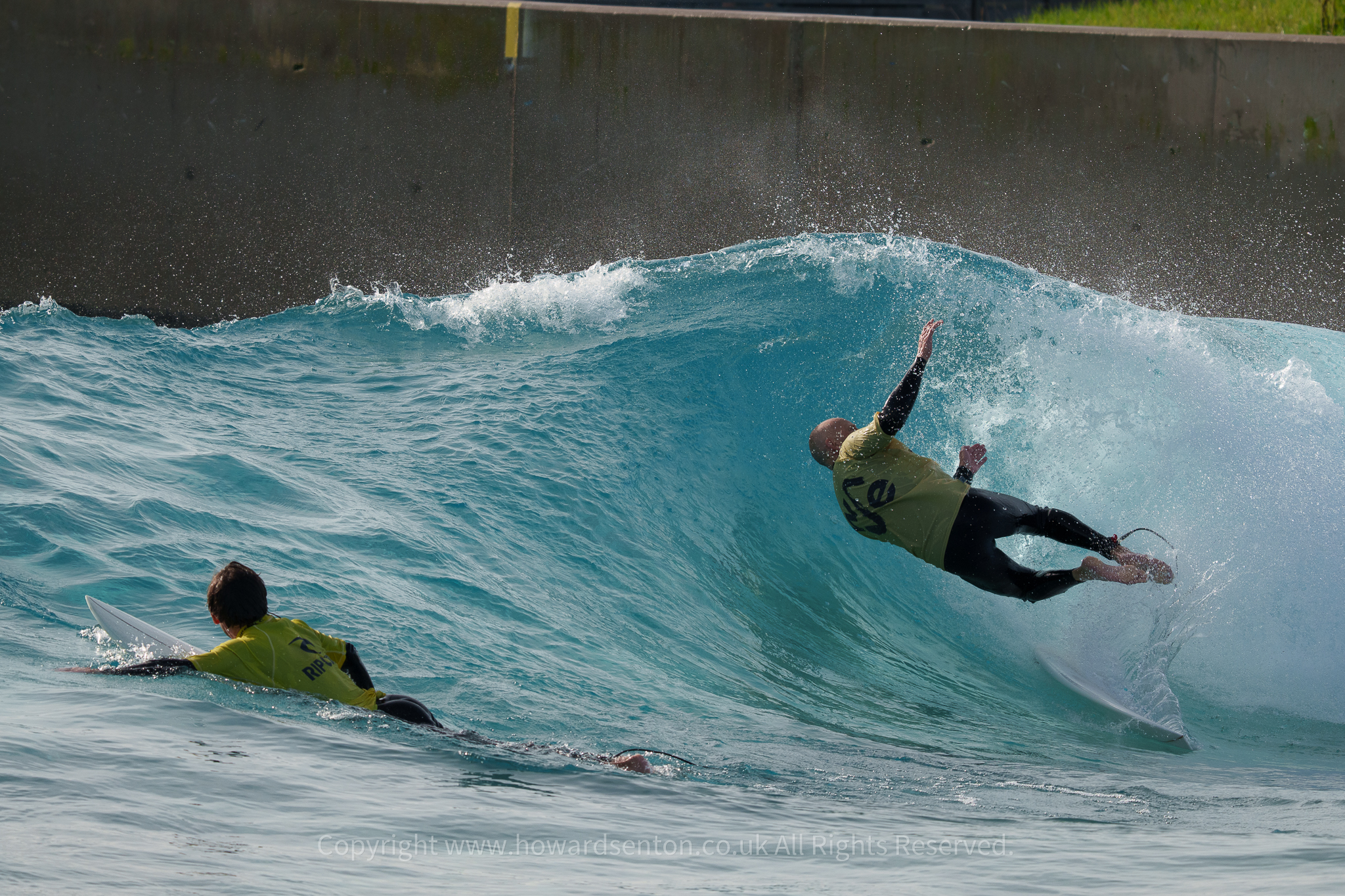
Surfing at The Wave Bristol – Everything You Need to Know
If you want to surf consistent waves in the UK without relying on the weather, swell direction, tides or wind, The Wave Bristol offers something completely different from traditional British surfing.
Located at Easter Compton in South Gloucestershire, just outside Bristol and close to Junction 17 of the M5, The Wave is an inland surfing destination built around a large freshwater surfing lake. It uses Wavegarden Cove technology to produce consistent waves for everyone from complete beginners through to experienced and advanced surfers.
For surfers travelling from Yorkshire, the North East, Wales, the Midlands or elsewhere in the UK, it can be an excellent destination for a dedicated surf trip, coaching session or simply a chance to get more water time.
What is The Wave Bristol?
The Wave is an artificial surfing lake designed to provide predictable, repeatable waves throughout the year.
Unlike surfing at places such as Scarborough, Cayton Bay, Whitby, Saltburn or Tynemouth, you don’t need to wait for the right combination of swell, wind and tide.
The Wave uses Wavegarden Cove technology, which can generate up to 1,000 waves per hour. The technology can produce waves ranging from approximately 50cm (1.7ft) to almost 2m (6.5ft), depending on the session and wave setting.
The surfing lake is approximately 180 metres long and 200 metres wide, with different areas designed around different levels of surfing ability.
This makes The Wave particularly useful for surfers who want to work on specific parts of their surfing rather than simply chase whatever conditions the ocean happens to provide.
Where is The Wave Bristol?
The Wave Bristol
Easter Compton
South Gloucestershire
BS35 5RE
The Wave is approximately 20 minutes from Bristol city centre and is close to Junction 17 of the M5.
Getting there by car
From the M5:
- Leave the M5 at Junction 17.
- Follow the B4055 towards Easter Compton.
- Continue through Easter Compton.
- The Wave entrance is shortly after leaving the village.
There is free parking at the site.
Important: the car park is approximately 1km from the surfing area. The Wave recommends arriving at least 60 minutes before your surf session so you have enough time to park, walk to the venue, check in, change and complete the safety briefing.
This is particularly important if you’re carrying a board, travelling with children or visiting for the first time.
What are the waves like?
One of the biggest attractions of The Wave is consistency.
Instead of waiting for a set to arrive, the wave machine creates a regular sequence of waves. The Wave says it can produce a new wave approximately every 8–10 seconds.
The lake is divided into different surfing areas, allowing surfers to progress from beginner waves towards more powerful waves.
Beginner waves
The beginner area is designed for people who are just starting their surfing journey.
The waves are generally whitewater and much smaller and more forgiving than the advanced sections.
This makes it an excellent environment for learning:
- Paddling
- Standing up
- Balance
- Board control
- Turning
- Surf etiquette
- Wave selection
- Basic surf safety
Beginners don’t have to worry about currents, rips or changing swell conditions in the same way they would at an exposed beach break.
Improver and intermediate surfing
Once you’ve learned to stand and can control your board, The Wave provides progressively more challenging waves.
The Improver area is intended for confident beginners who are ready to move away from whitewater and start catching unbroken waves.
Intermediate sessions provide steeper and more powerful waves and are aimed at surfers who already have experience in the ocean.
This is where The Wave becomes particularly useful for improving your surfing.
You can concentrate on:
- Take-off position
- Bottom turns
- Top turns
- Speed generation
- Trimming
- Stance
- Foot placement
- Wave reading
- Linking turns together
Because the wave is repeatable, you can attempt the same manoeuvre repeatedly rather than waiting half an hour for another suitable wave.
Advanced surfing at The Wave
Experienced surfers can use the more powerful settings to work on performance surfing.
The higher-level waves are designed for surfers who already have good board control and experience surfing unbroken waves.
Depending on the session, surfers can work on:
- Powerful bottom turns
- Top turns
- Cutbacks
- Re-entries
- Carves
- Speed generation
- Critical sections
- Aerials
- Barrels
The Wave also offers advanced and expert-level surfing, providing substantially more powerful waves than the beginner areas. The technology is capable of producing waves approaching 2m/6.5ft.
Barrel surfing at The Wave
One of the biggest attractions for experienced surfers is the opportunity to practise barrels in a controlled environment.
Unlike an ocean barrel, where the wave can change from one set to the next, an artificial wave gives you much greater consistency.
That means you can work on:
- Positioning
- Take-off timing
- Getting your line right
- Staying high on the wave
- Getting through the barrel
- Tube stance
- Exiting the barrel
For photographers, this also creates an interesting opportunity because the same type of wave is repeatedly produced.
Surf lessons at The Wave Bristol
You don’t have to be an experienced surfer to visit The Wave.
The Wave offers lessons for different ability levels, from children taking their first steps on a surfboard to experienced surfers looking to improve their performance.
Beginner lessons combine land-based instruction with time in the water.
The Wave currently lists beginner lessons for surfers aged 6+, while specific children’s programmes are also available.
Lessons can cover:
- Surf equipment
- Water safety
- Board handling
- Paddling
- Standing up
- Positioning
- Wave selection
- Surf technique
- Improving confidence
For someone completely new to surfing, taking a lesson before booking an independent session is a sensible option.
How long is a surf session?
Standard surf sessions are approximately one hour in the water.
Lessons are longer overall because they include preparation and land-based coaching. The Wave says its lessons are generally structured around a 30-minute dry-side lesson followed by approximately 60 minutes in the water.
That means you should allow considerably more time at the venue than simply the advertised surfing time.
What equipment do you need?
One of the advantages of The Wave is that you don’t necessarily have to travel with a full load of surf equipment.
The Wave currently includes:
- Wetsuit
- Boots
- Gloves
- Hood
- Beginner equipment
Foam boards are available for Beginner and Intermediate sessions, while a range of hardboards and performance softboards can also be hired, subject to availability.
You can also take your own board if it is suitable for the session you have booked.
What should you take?
I’d recommend bringing:
- Swimwear
- Towel
- Water bottle
- Sun cream
- Your own board if preferred
- Your own leash if you prefer using it
- Warm clothes for before and after surfing
- Change of clothes
- Waterproof bag for wet kit
The Wave also has changing facilities and lockers.
Choosing the right surfboard
Board choice is important at The Wave.
If you’re learning, don’t be tempted to take a small performance shortboard simply because it looks more exciting.
A bigger board gives you:
- More stability
- Easier paddling
- Easier wave entry
- More stability during the pop-up
- More forgiveness when you make mistakes
The Wave itself recommends choosing a bigger foam board if you’re unsure when using its free boards.
For intermediate surfers, board choice becomes more dependent on the particular wave setting.
A board that works brilliantly in a UK beach break may not necessarily be the ideal board for an artificial wave.
Surfing etiquette at The Wave
Although The Wave is artificial, normal surf etiquette still matters.
Remember:
Respect priority
Don’t deliberately take another surfer’s wave.
Stay in control
The waves are predictable, but other surfers are still around you.
Don’t ditch your board
A loose board can become dangerous to another surfer.
Listen to the lifeguards
The Wave has a controlled surfing environment with specific rules for each area.
Know your ability
Don’t book an advanced session simply because you can stand up on a surfboard.
The higher settings produce significantly more powerful waves.
The left or right wave choice
One difference between surfing in the ocean and surfing at The Wave is that you need to understand how the surfing areas operate.
Depending on your session, you will be assigned a particular side of the surfing area.
This means you should understand whether you’re surfing a left or a right and choose the appropriate positioning.
This can actually be very useful for improving surfers because it allows you to concentrate on one direction of surfing.
For example, a regular-footed surfer wanting to improve their backside surfing can deliberately work on the appropriate wave direction.
The Wave compared with surfing in the sea
The Wave
Advantages
- Consistent waves
- No need for ocean swell
- No changing tide
- No wind-dependent forecast
- Predictable wave shape
- Excellent for coaching
- Excellent for repetition
- Suitable for beginners
- Advanced waves available
- Useful for practising manoeuvres
Disadvantages
- Sessions can be expensive compared with free beach surfing
- You need to book
- The experience is different from surfing in the ocean
- You don’t get natural swell conditions
- The walk from the car park can be inconvenient with equipment
Traditional UK surfing
Surfing the coast provides something The Wave cannot completely reproduce:
the ocean itself.
Surfing at Scarborough, Cayton Bay, Whitby, Saltburn, Tynemouth, Cromer or other UK breaks teaches you to deal with:
- Tides
- Currents
- Wind
- Changing swell
- Wave selection
- Crowds
- Rips
- Different beach types
- Changing wave faces
The best approach is therefore not necessarily The Wave versus the ocean.
For many surfers, the two complement each other.
The Wave for surfers travelling from Yorkshire
For surfers based in Yorkshire and the North East, The Wave can make an interesting addition to an inland surf trip.
Yorkshire surfers are used to dealing with highly variable North Sea conditions.
You might have a great session at Cayton Bay or Saltburn one day and then find completely different conditions the next.
The Wave gives you the opportunity to remove that uncertainty.
For example, you could use a trip to Bristol to concentrate on a particular part of your surfing:
Trip 1: Improve your take-off.
Trip 2: Work on bottom turns.
Trip 3: Improve your cutback.
Trip 4: Work on backside surfing.
Trip 5: Progress towards advanced waves.
This makes the facility particularly useful for surfers who don’t get into the water as often as they would like.
The Wave for surf photography
The Wave can also be interesting for surf photographers.
The consistent waves make it much easier to anticipate where the action will happen.
For a photographer, that means you can concentrate on:
- Positioning
- Shutter speed
- Autofocus
- Composition
- Spray
- Turns
- Barrels
- Lifestyle photographs
Rather than spending hours waiting for the right wave, you know that another wave will be coming shortly.
Camera settings
For action photography, a good starting point is:
Shutter speed: 1/1600–1/2500 sec
Aperture: f/4–f/8 depending on the lens and lighting
ISO: Auto or adjust according to conditions
Autofocus: Continuous AF
Drive: High-speed continuous shooting
For barrel or spray photography, fast shutter speeds are particularly useful for freezing water droplets.
Can spectators watch?
Yes. The Wave has areas where visitors can watch the surfing without taking part themselves.
There is also an on-site café/restaurant, surf shop and other facilities, making it possible for non-surfers to spend the day at the venue.
This makes it useful for families where only one or two people want to surf.
Food and facilities
The Wave isn’t simply a surf lake.
The site includes:
- Clubhouse
- Café/restaurant
- Changing facilities
- Lockers
- Surf shop
- Equipment hire
- Viewing areas
- Skate facilities
- Children’s facilities
- Accommodation options
There are also camping and glamping options, allowing surfers to turn a session into a longer stay.
Staying at The Wave
If you’re travelling a long distance, staying on-site can make sense.
The Wave offers accommodation including camping and safari-style accommodation.
This could be particularly useful if you’re travelling from Yorkshire, the North East, the Midlands or further afield and want to combine several surf sessions with a short break.
The Wave Surfboard Expo
The Wave also hosts surf-related events.
In August 2026, for example, The Wave hosted a Surfboard Expo featuring surfboards, brands, food, music and camping.
It’s worth checking the events calendar before travelling because there may be surf events, community activities and other activities happening alongside your surf session.
Tips for your first visit
1. Arrive early
Don’t underestimate the walk from the car park.
The Wave recommends arriving at least one hour before your surf session.
2. Complete your waiver beforehand
Complete the required online paperwork before arriving.
3. Don’t rush
Give yourself time to park, walk, check in, change and attend the safety briefing.
4. Choose the correct session
Be honest about your ability.
5. Use a bigger board if you’re learning
Volume and stability are your friends.
6. Watch the surfers before your session
This can help you understand how the wave works.
7. Warm up
Even though the water is controlled, surfing is physically demanding.
8. Don’t forget water
You can refill your bottle around the site.
9. Bring warm clothes
You may spend considerable time outside the water.
10. Enjoy the repetition
One of the biggest benefits of The Wave is the opportunity to repeat the same manoeuvre over and over.
Is The Wave Bristol worth visiting?
For beginners, yes.
It provides a controlled environment where you can learn without having to deal with the full complexity of an ocean surf break.
For intermediate surfers, it can be even more valuable because you can work on technique and repetition.
For advanced surfers, the higher settings provide an opportunity to work on performance surfing and barrels.
But The Wave shouldn’t be regarded as a replacement for surfing in the sea.
The ocean teaches you how to read constantly changing conditions. The Wave gives you the opportunity to concentrate on your surfing in a controlled environment.
The two are best used together.
Quick Guide to The Wave Bristol
| Feature | Details |
|---|---|
| Location | Easter Compton, South Gloucestershire |
| Postcode | BS35 5RE |
| Nearest motorway | M5 Junction 17 |
| Type | Inland artificial surf lake |
| Wave technology | Wavegarden Cove |
| Lake size | Approximately 180m × 200m |
| Wave size | Approximately 0.5m–2m depending on setting |
| Ability | Beginner to Expert |
| Lessons | Available |
| Surf sessions | Available |
| Board hire | Available |
| Wetsuit hire | Included with surf sessions |
| Parking | Free |
| Car park to lake | Approximately 1km |
| Café | Yes |
| Surf shop | Yes |
| Accommodation | Yes |
| Surf photography | Excellent opportunity |
Information and prices can change, so check the official site before travelling. The Wave’s current opening times vary throughout the year.
Useful Links
Official website: The Wave Bristol
Surf sessions and lessons: The Wave – Surf Sessions & Lessons
First visit information: The Wave – Your First Visit
Getting there: The Wave – Getting to The Wave
FAQs: The Wave – FAQs and Knowledge Base
Final Thoughts
The Wave Bristol is one of the most unusual places to surf in Britain.
It isn’t a replacement for the experience of paddling out into the North Sea at Cayton Bay, Scarborough, Whitby or Saltburn, but it offers something the sea can’t provide: repeatable waves on demand.
For beginners, it can accelerate learning.
For intermediate surfers, it provides valuable repetition.
For advanced surfers, it provides an opportunity to work on performance and barrels.
And for photographers, it provides a remarkably predictable environment for capturing surfing action.
If you’re serious about improving your surfing, a day at The Wave followed by a day surfing the real ocean can make a very good UK surf trip.
No responses yet