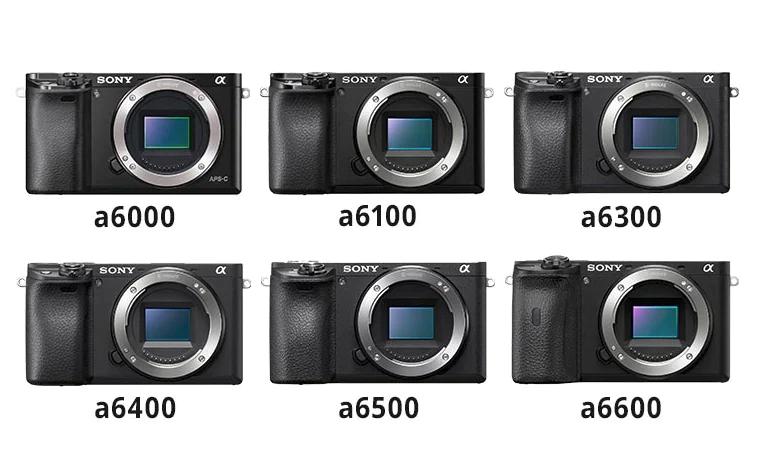
If you’re buying your first proper camera, Sony’s A6xxx range is one of the best places to start.
The range can also be confusing. You have the A6000, A6100, A6300, A6400, A6500, A6600 and A6700, and although they look similar, there are some important differences.
This guide is designed for someone who is completely new to photography and wants to understand what the cameras do, which one to buy, which lenses to choose and how to get started.
The short answer
If you don’t want to read the entire guide yet:
| Camera | Best for | My rating |
|---|---|---|
| Sony A6000 | Cheapest way into Sony | ⭐⭐⭐⭐ |
| Sony A6100 | Affordable modern beginner camera | ⭐⭐⭐⭐½ |
| Sony A6300 | Older enthusiast camera | ⭐⭐⭐½ |
| Sony A6400 | Best value for beginners | ⭐⭐⭐⭐⭐ |
| Sony A6500 | Older camera with IBIS | ⭐⭐⭐½ |
| Sony A6600 | IBIS + big battery | ⭐⭐⭐⭐½ |
| Sony A6700 | Best overall A6xxx | ⭐⭐⭐⭐⭐ |
My recommendations
Cheapest: A6000
Best cheap modern option: A6100
Best value: A6400
Best for action: A6400 / A6700
Best for surf photography: A6700
Best for wildlife: A6700
Best video: A6700
Best long-term camera: A6700
1. What is a Sony A6xxx camera?
The A6xxx cameras are Sony’s APS-C mirrorless interchangeable-lens cameras.
That sounds complicated, but it really isn’t.
You have:
Camera body + lens + sensor = photograph
The important thing is that these cameras use Sony’s E-mount.
Sony confirms that the A6000-series cameras use E-mount lenses, giving you access to a large range of Sony and third-party lenses.
This is one of the biggest reasons I would recommend the system to a beginner.
You aren’t buying a camera that locks you into one lens.
You can start with one cheap lens and gradually build a complete photography system.
2. What does APS-C mean?
APS-C is the size of the camera’s image sensor.
You don’t need to understand all the technical details to start taking photographs.
The important thing to know is:
APS-C cameras are smaller than full-frame cameras but can produce excellent image quality.
The A6000, A6100, A6300, A6400, A6500 and A6600 use APS-C sensors around 23.5 × 15.6mm, while the A6700 uses a slightly different 23.3 × 15.5mm APS-C sensor.
For most beginners, APS-C is an excellent compromise between:
- Image quality
- Camera size
- Lens size
- Price
- Portability
3. The complete A6xxx family
The easiest way to understand the range is to look at how Sony developed it.
First generation
A6000
↓
Enthusiast generation
A6300
A6500
↓
Newer generation
A6100
A6400
A6600
↓
Current generation
A6700
The numbering can be confusing because the A6100 arrived after the A6500.
Don’t assume that a higher number always means a newer camera.
4. Sony A6000
The cheap entry point
The A6000 was released in 2014 and is still a surprisingly capable camera.
It has a 24.3MP APS-C sensor, Fast Hybrid AF and continuous shooting up to 11fps.
Good things
- 24MP
- Compact
- Lightweight
- Interchangeable lenses
- Electronic viewfinder
- 11fps shooting
- Good image quality
- Very cheap second-hand
- Huge range of lenses
Downsides
It’s an old camera.
You don’t get the newer autofocus systems found in the A6100/A6400 generation.
It also doesn’t record 4K video.
Who should buy it?
Someone who says:
“I want a proper camera but I don’t want to spend much.”
That’s where the A6000 makes sense.
5. Sony A6100
The affordable modern beginner camera
The A6100 is one of the cameras I think beginners sometimes overlook.
It’s considerably newer than the A6000 and introduced Sony’s much more modern autofocus/tracking technology.
You get:
- 24.2MP
- 4K
- Touchscreen
- Eye AF
- Real-time Tracking
- 11fps shooting
- E-mount
Why choose it?
If you’re looking at an A6000 but have a little more money available, the A6100 is worth considering.
It’s much better suited to moving subjects.
That means:
- Children
- Dogs
- Sports
- Wildlife
- Birds
- Cars
- Surfing
6. Sony A6300
The older enthusiast model
The A6300 was a significant step up from the A6000.
It introduced:
- 24.2MP APS-C
- 4K video
- improved autofocus
- improved viewfinder
- microphone input
- more enthusiast-oriented features
Sony’s specifications confirm its 24.2MP APS-C sensor and E-mount compatibility.
Is it still worth buying?
It can be.
But there’s a problem.
The A6400 is newer and has much more advanced autofocus.
Therefore, I’d only choose an A6300 today if you find a very good second-hand deal.
7. Sony A6400
⭐ My favourite beginner/value option
If somebody asked me:
“Which Sony A6xxx should I buy as my first proper camera?”
The A6400 would probably be my answer.
It gives you an excellent combination of:
- 24.2MP
- Excellent autofocus
- Real-time Tracking
- Eye AF
- 4K
- Touchscreen
- 11fps shooting
- Compact body
- Microphone input
- Excellent lens selection
Sony lists the A6400 with a 24.2MP APS-C sensor and 14-bit RAW capability.
Why I like it
It’s capable enough for serious photography but still approachable for somebody learning.
You can buy one and potentially use it for years.
8. Sony A6500
The first A6xxx with IBIS
The A6500 is interesting because it introduced 5-axis in-body image stabilisation into this family.
Sony rates the A6500’s sensor-shift stabilisation at up to 5 stops under its specified test conditions.
You also get:
- 24.2MP
- 4K
- 11fps
- Touchscreen
- IBIS
- Microphone input
- Headphone output
The problem
It’s an older camera.
If you’re buying second-hand and find one very cheaply, it can make sense.
But if the price gets close to an A6600 or A6700, I’d normally look at the newer camera.
9. Sony A6600
The serious all-rounder
The A6600 took many of the features people liked about the A6400 and added:
IBIS
and
Sony’s larger NP-FZ100 battery.
It has a 24.2MP APS-C sensor.
This makes the A6600 particularly interesting for:
- Travel
- Wildlife
- Surfing
- Hiking
- Long photography sessions
- Video
A6400 vs A6600
The A6400 is smaller and cheaper.
The A6600 gives you:
IBIS + larger battery + larger grip + headphone connection
If you shoot for long periods, those differences become useful.
10. Sony A6700
🏆 The best A6xxx camera
The A6700 is the latest generation of the A6xxx family.
And it isn’t simply an A6600 with a few improvements.
It’s a much more modern camera.
You get:
- 26MP APS-C sensor
- BIONZ XR processor
- AI processing unit
- advanced subject recognition
- Real-time Tracking
- 5-axis IBIS
- 4K video
- 10-bit video
- 4K/120p recording
- larger NP-FZ100 battery
- fully articulating screen
- USB-C
Sony lists the A6700 at approximately 26MP effective resolution, with 14-bit RAW recording and 5-axis stabilisation.
11. Why is the A6700 so good for beginners?
You might think:
“Surely a beginner doesn’t need an expensive camera?”
That’s partly true.
You don’t need an A6700.
But there is another way of looking at it.
You can buy:
A6700 → learn photography → improve your skills → keep the camera for years
rather than:
A6000 → outgrow it → buy A6400 → upgrade again
If you know you’re going to take photography seriously, buying the better body from the start can make sense.
12. Autofocus explained
Autofocus is simply:
The camera automatically focuses the lens for you.
But modern cameras do much more than simply find something to focus on.
They can track subjects as they move.
That’s incredibly useful for:
- Sport
- Wildlife
- Birds
- Dogs
- Children
- Cars
- Surfing
Older cameras
A6000
A6300
A6500
Newer autofocus generation
A6100
A6400
A6600
Newest generation
A6700
The A6700 goes further with subject recognition.
13. Why autofocus matters for surf photography
Imagine photographing a surfer.
They’re moving:
left → right → towards you → away from you
while waves and spray are moving around them.
You want the camera to keep the surfer sharp.
That’s where modern autofocus becomes incredibly useful.
For this reason, I’d choose:
A6400 or A6700
over an older A6000 if surfing is one of your main subjects.
14. What is IBIS?
IBIS stands for:
In-Body Image Stabilisation
It moves the camera’s sensor to compensate for small movements from your hands.
No IBIS
A6000
A6100
A6300
A6400
IBIS
A6500
A6600
A6700
The A6500 was the first A6xxx model to introduce 5-axis sensor stabilisation.
15. Does IBIS matter for surfing?
Not as much as you might think.
If you’re photographing a surfer at:
1/1000 second
you already have a very fast shutter speed.
Your priority is freezing the surfer’s movement.
IBIS doesn’t freeze the surfer.
It mainly helps compensate for camera movement.
So for surf photography:
Fast shutter speed + good autofocus + long lens
are generally more important than IBIS.
16. Video
If you want to make videos, the differences become important.
A6000
Basic video.
A6100
4K.
A6300
4K.
A6400
4K.
A6500
4K.
A6600
4K.
A6700
Much more advanced 4K video, including 10-bit recording and high-frame-rate options.
If video is important
I’d concentrate on:
A6400
or
A6700
17. Which camera has the best battery?
The A6600 and A6700 use Sony’s larger NP-FZ100 battery.
That’s a major advantage if you’re spending an entire day photographing.
For example:
Surf session
↓
Wildlife day
↓
Landscape trip
↓
Event photography
You don’t want to constantly stop and change batteries.
18. Understanding lenses
This is perhaps the most important section for a beginner.
Your camera body matters.
But your lens matters enormously.
Sony’s APS-C cameras use E-mount lenses, and Sony explains that focal length determines the lens’s angle of view.
Think about lenses like this:
Wide
10–20mm
Great for:
- Landscapes
- Buildings
- Architecture
- Interiors
Standard
16–50mm
Great for:
- Everyday photography
- Travel
- Family
- General use
Portrait
50–56mm
Great for:
- People
- Portraits
- Detail
Telephoto
70–350mm
Great for:
- Wildlife
- Birds
- Sports
- Surfing
Super telephoto
200–600mm
Great for:
- Surfing
- Wildlife
- Birds
19. Why APS-C changes focal length
Sony explains that a 50mm lens on an APS-C camera gives approximately the same field of view as a 75mm lens on full frame.
That’s because of the roughly 1.5× crop factor.
So:
50mm × 1.5 = 75mm
and:
200mm × 1.5 = 300mm
and:
600mm × 1.5 = 900mm
This is one reason APS-C cameras are fantastic for wildlife and surf photography.
20. A beginner’s first lens
If you’re buying your first A6xxx camera, you don’t need five lenses.
Start with one.
Good starting point
16-50mm
It’s small and gives you a useful range.
You can photograph:
- People
- Buildings
- Landscapes
- Cars
- Holidays
- Family
- Street photography
Then learn what you actually need before buying another lens.
21. When should you buy another lens?
Don’t buy another lens because:
“Everyone on YouTube says I need one.”
Buy it because you’ve encountered a problem.
For example:
“I can’t get close enough to the surfers.”
You need a longer lens.
Or:
“I can’t fit this building into the photograph.”
You need a wider lens.
Or:
“I want the background really blurry.”
You might want a faster prime lens.
That’s a much better way to build a kit.
22. Photography basics every beginner should learn
You don’t need to learn everything at once.
Start with the exposure triangle.
Aperture
f/1.8 → f/2.8 → f/4 → f/5.6 → f/8 → f/11
Affects:
- Amount of light
- Depth of field
Shutter speed
1/30 → 1/125 → 1/500 → 1/1000
Controls motion.
Slow:
1/30
Fast:
1/1000
For surfing, you might often use around:
1/1000 sec or faster
depending on conditions and the effect you want.
ISO
ISO controls how sensitive the camera is to light.
For example:
ISO 100
Clean, bright conditions.
ISO 3200
Much darker conditions.
Higher ISO can introduce more noise.
23. A great beginner camera setting
Don’t immediately jump into full manual.
Try:
Mode
Aperture Priority – A
ISO
Auto ISO
Autofocus
AF-C
Drive mode
Continuous shooting
This lets you concentrate on composition while learning what the camera is doing.
24. When should you use Manual?
Once you’re comfortable with:
- Aperture
- Shutter speed
- ISO
- Exposure compensation
move towards:
Manual + Auto ISO
This can be extremely useful for action photography.
You can decide:
“I need 1/1000 sec.”
and:
“I want f/5.6.”
The camera can then adjust ISO to achieve the exposure.
25. RAW vs JPEG
Another beginner question:
“Should I photograph in RAW or JPEG?”
JPEG
The camera processes the photograph for you.
Advantages:
- Smaller files
- Easy to share
- Ready to use
RAW
The camera saves much more original image information for editing.
Advantages:
- More control
- Better editing flexibility
- Better recovery of shadows/highlights
- Excellent for Lightroom
If you’re serious about photography, I’d recommend learning to shoot:
RAW
or:
RAW + JPEG
26. Lightroom
Once you start shooting RAW, you’ll probably want an editing program.
Adobe Lightroom is particularly popular with photographers.
A basic workflow is:
Camera
↓
Import RAW files
↓
Select best photographs
↓
Crop
↓
Exposure
↓
White balance
↓
Highlights/shadows
↓
Colour
↓
Sharpening
↓
Export JPEG
Don’t spend hours editing every photograph.
Learn to get the photograph right in camera first.
27. Back-button focus
Once you’re comfortable with autofocus, learn about back-button focus.
Normally:
Half press shutter → focus
With back-button focus:
AF button → focus
Shutter button → take photograph
This can be particularly useful for:
- Surfing
- Wildlife
- Birds
- Sports
- Action
It’s not something you need to master on day one.
But it’s a very useful technique to learn as you progress.
28. Which A6xxx should you buy?
Under a tight budget
A6000
Look for a good second-hand example.
Spend the money you save on a better lens.
Beginner with a moderate budget
A6100
A very capable modern starting point.
Best value
🏆 A6400
This is the camera I’d recommend to most beginners.
Want IBIS?
A6600
Especially useful if you’re also interested in video and long shooting sessions.
Want the best?
🏆 A6700
If you can afford it and plan to take photography seriously, this is the one I’d choose.
29. What about the A6300 and A6500?
Don’t completely ignore them.
They’re older, but second-hand prices can make them interesting.
Buy an A6300 if:
You find an excellent bargain.
Buy an A6500 if:
You specifically want IBIS and find one at a good used price.
But don’t pay nearly-new prices for an old body when a newer camera is available for similar money.
30. Best A6xxx for different types of photography
| Photography | Best choice |
|---|---|
| Beginner | A6400 |
| Cheap beginner | A6000 |
| Family | A6400 |
| Travel | A6400 |
| Street | A6400 |
| Landscape | A6400 / A6700 |
| Portrait | A6400 / A6700 |
| Sports | A6700 |
| Wildlife | A6700 |
| Birds | A6700 |
| Surf | A6700 |
| Video | A6700 |
| Vlogging | A6700 |
| Long shooting sessions | A6600 / A6700 |
| Cheapest used setup | A6000 |
31. Best beginner Sony kits
Cheap
A6000 + 16-50mm
A great way to learn photography without spending a fortune.
Best value
A6400 + 16-50mm
This is probably my favourite beginner combination.
Serious beginner
A6700 + 18-135mm
A very versatile setup for travel and general photography.
Surf photography
A6700 + 200-600mm
A much more specialised setup.
The long lens gives you the reach needed to photograph surfers from the beach.
Wildlife
A6700 + 70-350mm
A lighter and more portable wildlife setup.
32. Don’t spend all your money on the camera
This is one of the biggest mistakes beginners make.
Imagine you have:
£1,500
You could spend:
£1,500 on the body
and then have no money for a decent lens.
Or you could buy:
A6400
and spend more of your budget on:
better glass
I’d normally favour the second approach.
33. Remember: lenses can stay with you
One of the biggest advantages of the Sony system is that you can build your lenses gradually.
For example:
Year 1
A6400 + 16-50mm
↓
Year 2
Add 70-350mm
↓
Year 3
Upgrade body to A6700
↓
Keep the lenses
Sony confirms that APS-C E-mount cameras can use both APS-C E-mount and full-frame E-mount lenses, with the appropriate crop/field-of-view considerations.
That makes upgrading much less painful.
34. What should a complete beginner learn first?
Don’t try to learn everything in one week.
Week 1
Learn:
- Camera controls
- Focus
- Zoom
- ISO
- Aperture
- Shutter speed
Week 2
Learn:
- Composition
- Rule of thirds
- Leading lines
- Backgrounds
- Framing
Week 3
Learn:
- RAW
- Lightroom
- Exposure
- White balance
Week 4
Start experimenting with:
- Manual exposure
- AF-C
- Tracking
- Back-button focus
- Burst shooting
35. My A6xxx ranking
🥇 Sony A6700
Best overall
Modern autofocus, subject recognition, IBIS and advanced video.
🥈 Sony A6400
Best value
Fantastic beginner camera that can also become a serious photography tool.
🥉 Sony A6600
Best older premium option
IBIS, large battery and excellent autofocus.
4️⃣ Sony A6100
Best cheaper modern camera
Excellent entry point.
5️⃣ Sony A6500
Best older IBIS bargain
Worth considering second-hand.
6️⃣ Sony A6300
Good older enthusiast camera
Still capable, but harder to recommend against newer models.
7️⃣ Sony A6000
Best ultra-budget option
Old but still capable of excellent photographs.
36. The most important thing to remember
You don’t need the most expensive camera to become a good photographer.
A:
Sony A6000 + good lens + good technique
can produce a better photograph than:
Sony A6700 + expensive lens + poor technique.
The camera is a tool.
You are the photographer.
37. My recommendation for a first Sony camera
If you’re completely new:
💰 Very limited budget
A6000
💷 Affordable but modern
A6100
🏆 Best value
A6400
🎥 Serious video / IBIS / long battery
A6600
🏆 Best overall
A6700
And if your main interest is surf, wildlife, birds or other action photography, I’d skip the oldest cameras and concentrate on the A6400, A6600 and A6700.
38. Your Sony photography journey
A really good way to approach photography is:
Buy camera
↓
Learn the controls
↓
Learn exposure
↓
Learn autofocus
↓
Learn composition
↓
Learn RAW
↓
Learn Lightroom
↓
Buy better lenses
↓
Photograph things you enjoy
↓
Upgrade only when you actually hit a limitation
That last point is important.
Don’t upgrade because a new camera has been released.
Upgrade because your current camera is stopping you doing something you want to do.
The complete Sony beginner setup
If I were starting a Sony APS-C system today, I’d seriously consider:
Camera
Sony A6400
Everyday lens
16-50mm
Later addition
70-350mm
Action/surf upgrade
200-600mm
Editing
Lightroom
Shooting
RAW
Autofocus
AF-C
Action
High-speed continuous shooting
And when you’ve learned the system and want more:
Upgrade the A6400 → A6700
while keeping the lenses.
That gives you a very sensible route from complete beginner to serious photographer.
No responses yet