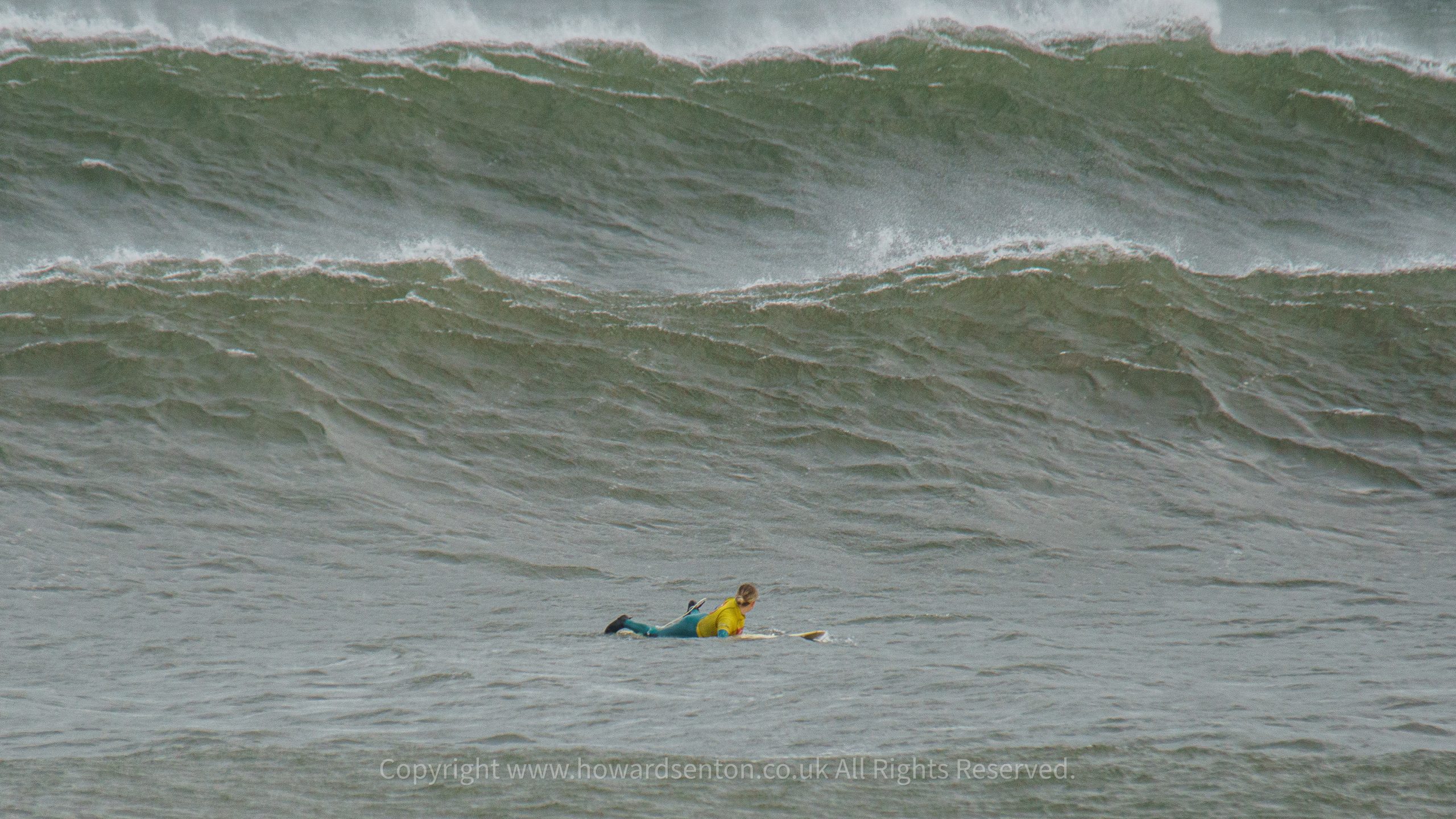
If you are learning to read a surf forecast, one of the most important numbers to understand is wave period.
You might see a forecast showing:
Wave height: 1.2m
Wave period: 12 seconds
Swell direction: NW
But what does the 12-second wave period actually mean?
Understanding wave period can help you work out whether a forecast is likely to produce weak, messy waves or powerful, well-organised surf.
For surfers in Yorkshire and along the UK coastline, wave period is particularly useful because our conditions can change quickly and the same forecast wave height can produce very different surfing conditions.
What Is Wave Period?
Wave period is the amount of time, measured in seconds, between successive wave crests passing a fixed point.
For example, if a surf forecast says:
Wave period: 10 seconds
it means there are approximately 10 seconds between one wave crest and the next as they pass a particular location.
The wave period is not the amount of time a wave takes to travel from where it was generated to the beach.
Instead, it tells you something about the spacing and energy of the waves within a swell.
A simple example
Imagine standing on the beach watching the sea.
A wave comes past:
Wave 1 → 1…2…3…4…5…6…7…8…9…10 → Wave 2
That would be approximately a 10-second wave period.
Why Does Wave Period Matter to Surfers?
Wave period is important because it gives you an indication of the energy and organisation of the swell.
Two forecasts might both predict waves of around 1 metre.
However:
1m @ 6 seconds
can produce very different surf from:
1m @ 14 seconds.
The longer-period swell generally contains considerably more energy and can produce waves that feel much bigger and more powerful when they reach the coast.
This is one reason you should never look at wave height alone when deciding whether it is worth going surfing.
Short-Period Waves
A short-period swell generally has a wave period of around 5–8 seconds.
These waves are often generated relatively close to the coastline by local winds.
They can produce:
- Choppy conditions
- Closely spaced waves
- Less organised surf
- Shorter rides
- Weak or inconsistent waves
- Difficult paddling conditions
- Lots of whitewater
Short-period waves aren’t necessarily bad.
In some conditions, particularly on shallow beaches and when the wind direction is favourable, they can produce fun surf.
But they often don’t have the same power and organisation as a longer-period groundswell.
Medium-Period Swell
A wave period of roughly 8–12 seconds can be considered a useful middle ground.
This type of swell can produce good surfing conditions, depending on:
- Wave height
- Swell direction
- Wind direction
- Tide
- Local beach shape
- Sandbanks
- Reef or point configuration
For many UK beaches, a swell in this range can produce very enjoyable waves.
This is why it is useful to look at the whole forecast rather than focusing on a single number.
Long-Period Swell
Long-period swells are generally associated with wave periods of around 13 seconds or more.
These waves have travelled much further from their generation area and can arrive at the coast as more organised swell.
Long-period swells can produce:
- More powerful waves
- Better wave shape
- Greater wave spacing
- Stronger sets
- Deeper-water wave energy
- Longer rides
- Bigger waves than you might expect from the forecast height
A long-period swell can sometimes make a beach suddenly come alive.
Why Does a Longer Wave Period Produce More Powerful Waves?
This is where things become particularly interesting.
Waves are not simply moving walls of water.
A swell carries energy across the ocean.
As the wave period increases, the waves generally become longer and faster-moving in deep water, and the energy associated with the swell increases significantly.
This means that:
1m @ 6 seconds
and
1m @ 14 seconds
should not be treated as equivalent surf.
The 14-second swell has substantially more energy.
Once that swell reaches shallower water, the seabed begins affecting the wave. The wave slows down, becomes shorter and increases in height.
This process is called shoaling.
Wave Period and Wave Height Work Together
One of the biggest mistakes beginners make when reading a surf forecast is looking only at wave height.
For example:
Forecast A
Wave height: 1.0m
Period: 6 seconds
This could mean small, messy and relatively weak surf.
Forecast B
Wave height: 1.0m
Period: 14 seconds
This could produce much more powerful waves.
The second forecast might therefore be considerably more challenging to surf.
This is especially important for beginners.
A forecast saying 1 metre does not automatically mean the conditions are beginner-friendly.
What Is the Difference Between Wind Swell and GroundSwell?
Wave period can also help you understand where the waves have come from.
Wind Swell
Wind swell is normally generated relatively close to the coast.
It tends to have:
- Shorter periods
- Shorter wavelengths
- More closely packed waves
- More chop
- Less organised wave shape
For example:
0.8m @ 6 seconds
could indicate locally generated wind swell.
GroundSwell
A groundswell is generated by a distant weather system and travels considerable distances across the ocean.
It tends to have:
- Longer periods
- Longer wavelengths
- More organised waves
- Greater energy
- More widely spaced waves
For example:
1.2m @ 14 seconds
could be associated with a distant Atlantic storm system.
The storm may be hundreds or even thousands of kilometres away, but the swell generated by it can eventually reach the UK.
Why Wave Period Is Important in Yorkshire
Yorkshire is exposed to a variety of North Sea swell directions, and local surf conditions can change dramatically depending on where the swell is coming from.
Spots around Scarborough, Cayton Bay, Filey, Whitby and other Yorkshire beaches can respond differently to the same swell.
A forecast showing:
NW swell – 1m @ 12 seconds
could produce very different conditions from:
E swell – 1m @ 7 seconds.
The beach orientation determines how much of that swell can actually reach the surf zone.
This is why understanding swell direction + wave period + wave height is much more useful than looking at wave height alone.
Wave Period at Cayton Bay
Cayton Bay is a good example of why you need to look at more than wave height.
A forecast might show relatively modest wave heights but a longer-period swell.
As that swell reaches the coastline, the seabed causes the waves to slow and increase in height.
Depending on the swell direction, tide and sandbanks, the resulting waves can be significantly different from what you might expect from the offshore forecast.
Always consider:
Wave height + wave period + swell direction + tide + wind.
Wave Period at Scarborough
Scarborough has several areas with different levels of exposure to swell.
The harbour and surrounding coastline can provide different conditions depending on the direction of the incoming swell.
A longer-period swell may wrap into areas that don’t appear particularly exposed when looking at the beach itself.
This is known as swell refraction.
Understanding wave period therefore helps you understand why some days produce surprisingly good surf even when the forecast initially doesn’t look spectacular.
Wave Period and Tide
Wave period doesn’t work independently from the tide.
The same swell can behave differently at:
- Low tide
- Mid tide
- High tide
As the water depth changes, waves interact differently with the seabed.
A long-period swell can become particularly powerful as it reaches shallow water.
This can make some long-period swells considerably more serious around reefs, rocks and shallow banks.
Always check local conditions before entering the water.
How Wave Period Affects Beginners
If you are learning to surf, a long-period swell isn’t automatically better.
In fact, it can sometimes make conditions more difficult and dangerous.
For example:
0.8m @ 7 seconds
might produce manageable whitewater and smaller waves.
Meanwhile:
1.0m @ 14 seconds
could produce powerful waves, strong currents and much more force.
Beginners should therefore avoid judging conditions solely from wave height.
If you are still learning, look for:
- Smaller wave heights
- Appropriate wave periods
- Light winds
- Clean conditions
- Gentle beach breaks
- Lifeguarded beaches where available
- Favourable tides
- Plenty of space
And, most importantly, surf within your ability.
What Wave Period Is Good for Surfing?
There isn’t one perfect wave period.
It depends on the surfer, the surfboard and the beach.
As a very general guide:
| Wave Period | What You Might Expect |
|---|---|
| 4–6 seconds | Very short-period/choppy conditions |
| 6–8 seconds | Wind swell and closely spaced waves |
| 8–10 seconds | Moderate swell |
| 10–12 seconds | Often well-organised surf |
| 12–15 seconds | Long-period groundswell |
| 15+ seconds | Very powerful long-period swell |
These are only general guidelines.
The actual surf depends heavily on the beach and the rest of the forecast.
Does a Longer Period Always Mean Better Surf?
No.
This is an important point.
A longer period usually means more swell energy, but that doesn’t automatically mean better surfing.
For example, a powerful 16-second swell hitting a shallow reef could produce waves that are completely unsuitable for a beginner.
Likewise, a small 7-second swell on a good sandbank could produce fun waves for an intermediate surfer.
The best surf is the combination of:
The right swell + the right beach + the right tide + the right wind.
What Is Wave Energy?
Wave energy is related to the amount of energy carried by the swell.
Wave height has a very large effect on wave energy, but wave period is also important.
This is why a small-looking long-period swell can still pack a serious punch.
A useful rule for surfers is:
Don’t underestimate a long-period swell.
If you see a significant increase in wave period in the forecast, pay attention.
A beach that looked small yesterday could become much more powerful when the longer-period swell arrives.
How to Read Wave Period on a Surf Forecast
When looking at a forecast, try reading the information together.
For example:
Example 1
Wave height: 0.7m
Period: 6 seconds
Direction: E
Wind: W
This could produce relatively small but potentially clean waves if the wind is offshore.
Example 2
Wave height: 1.0m
Period: 12 seconds
Direction: NE
Wind: W
This could produce more organised and powerful surf.
Example 3
Wave height: 1.5m
Period: 16 seconds
Direction: NW
This could represent a significant swell and potentially challenging conditions depending on the beach.
The important lesson is:
Never look at wave height in isolation.
What Is the Best Wave Period for Yorkshire Surfing?
There isn’t a single answer because Yorkshire has a variety of beaches and different swell exposures.
However, when checking a Yorkshire forecast, I would pay particular attention to:
1. Wave height
How big is the forecast swell?
2. Wave period
How much energy and spacing does the swell have?
3. Swell direction
Is the swell actually pointing towards the beach?
4. Wind direction
Is the wind offshore, cross-shore or onshore?
5. Wind speed
A good swell can be ruined by strong onshore winds.
6. Tide
Does the beach work best around low, mid or high tide?
7. Local conditions
Sandbanks, currents, rocks and coastal geography can make a huge difference.
Why Surf Forecasts Can Be Wrong
Even when a forecast predicts a particular wave period, conditions at the beach can be different.
Forecast models are predictions rather than guarantees.
Local factors can change what you actually see:
- Coastal geography
- Bathymetry
- Tide
- Wind
- Swell direction
- Swell interaction
- Local currents
- Sand movement
- Weather changes
This is why experienced surfers often check several sources before deciding where and when to surf.
Wave Period vs Wave Height
Think of wave height as:
How big is the wave?
Think of wave period as:
How much time is there between the waves, and what does that tell me about the swell?
You need both pieces of information.
A forecast showing:
1m @ 6 seconds
doesn’t mean the same thing as:
1m @ 14 seconds.
That small difference in the forecast can make a very big difference in the water.
A Simple Rule for Reading Wave Period
If you’re new to surf forecasting, remember this:
Short period = usually local, shorter, messier swell
Longer period = usually more organised, more powerful swell
But always combine wave period with wave height, swell direction, wind and tide.
Frequently Asked Questions
Is a 5-second wave period good for surfing?
It can be, but 5 seconds is a very short period. Waves are likely to be closely spaced and may be generated by local wind rather than a distant groundswell.
Is 10 seconds a good wave period?
10 seconds can produce useful surf, but conditions depend on the wave height, swell direction, wind and beach.
Is 15 seconds a big wave period?
A 15-second period represents a long-period swell and can carry substantial energy. It doesn’t necessarily mean the waves will be huge, but they can be considerably more powerful than a short-period swell of the same forecast height.
Does a longer wave period mean bigger waves?
Not necessarily. Wave height and period are separate measurements. However, a longer-period swell generally carries more energy and can produce powerful waves when it reaches shallow water.
What does 12 seconds mean on Surfline?
A 12-second period means approximately 12 seconds separate successive wave crests in the forecast swell. It is an indication of the swell’s spacing and energy characteristics.
Why can a 1m wave feel much bigger than expected?
Wave period is one possible reason. A long-period swell can carry considerably more energy than a short-period swell of the same forecast height.
Final Thoughts
Understanding wave period is one of the biggest steps towards becoming better at reading surf forecasts.
Instead of simply looking at:
“1 metre waves tomorrow.”
start asking:
“How high are the waves?”
“What’s the wave period?”
“Which direction is the swell coming from?”
“What’s the wind doing?”
“What is the tide doing?”
Once you start putting these pieces together, surf forecasts become much easier to understand.
And for surfers around Yorkshire, this can help you recognise the difference between a forecast that looks average on paper and one that could produce a really good day in the water.
Remember:
Wave height tells you how big the swell is.
Wave period tells you how the swell is spaced and gives you an important indication of its energy.
The longer the period, the more seriously you should consider the swell — especially when combined with increasing wave height.
Always check the latest local forecast and beach conditions before entering the water, and choose conditions appropriate for your ability.
No responses yet